For any of you locals who may have missed it, Wyrdsmith's own Naomi Kritzer is the guest of honor at MarsCon X this weekend. Her livejournal.
Update: Most of the Wyrdsmiths will be on a panel of Sunday
Noon-1:00 p.m., Re(a)d Mars (Room 1340)
Panel: Meet the Wyrdsmiths
Members of this highly successful SF writing group talk/answer questions about how their group works. Will their methods get positive results for other aspiring SF writers, including you?
Friday, February 29, 2008

Wednesday, February 27, 2008
Self-Promoting Authors Anonymous
With apologies to the original, the Twelve Steps for self-promoters:
1. We admitted we were powerless over sales—that our careers had become unmanageable.
2. Came to believe that surrendering to a marketing machine greater than ourselves could restore us to sanity–our publisher's publicity department.
3. Made a decision to turn our books and our careers over to the care of the marketing department as we understand it.
4. Made a searching and fearless sales analysis of our self-promotional efforts.
5. Admitted to our readers, to ourselves, and to another author the exact nature of our wrongs.
6. Were entirely ready to have marketing remove all these defects of shameless personal promotion.
7. Humbly asked our publicists to gloss over our marketing shortcomings.
8. Made a list of all the readers we had disappointed* and became willing to make amends to them all**.
9. Made direct amends to such readers wherever possible, except when to do so would injure them or others.
10. Continued to take personal inventory, and when we were marketing ourselves again, promptly admitted it.
11. Sought through blogs and other direct means to improve our conscious contact with readers as we understand them, asking only for knowledge of their will for us and the power to carry that out.
12. Having had a promotional awakening as the result of these steps, we tried to carry this message to other authors, and to practice these principles in all our impulses toward self-promotion.
*by promoting ourselves when we should have been writing
** by writing instead of trying to do the jobs of our publishers and their marketing departments
Hi, my name is Kelly, and I'm a self-promoting author.
1. We admitted we were powerless over sales—that our careers had become unmanageable.
2. Came to believe that surrendering to a marketing machine greater than ourselves could restore us to sanity–our publisher's publicity department.
3. Made a decision to turn our books and our careers over to the care of the marketing department as we understand it.
4. Made a searching and fearless sales analysis of our self-promotional efforts.
5. Admitted to our readers, to ourselves, and to another author the exact nature of our wrongs.
6. Were entirely ready to have marketing remove all these defects of shameless personal promotion.
7. Humbly asked our publicists to gloss over our marketing shortcomings.
8. Made a list of all the readers we had disappointed* and became willing to make amends to them all**.
9. Made direct amends to such readers wherever possible, except when to do so would injure them or others.
10. Continued to take personal inventory, and when we were marketing ourselves again, promptly admitted it.
11. Sought through blogs and other direct means to improve our conscious contact with readers as we understand them, asking only for knowledge of their will for us and the power to carry that out.
12. Having had a promotional awakening as the result of these steps, we tried to carry this message to other authors, and to practice these principles in all our impulses toward self-promotion.
*by promoting ourselves when we should have been writing
** by writing instead of trying to do the jobs of our publishers and their marketing departments
Hi, my name is Kelly, and I'm a self-promoting author.
Tuesday, February 26, 2008
Quick Re-Direct: Show, Don't Tell
I woke up this morning and discovered I was meant to write a post over at SF Novelists. So, in keeping with my "great debates of writing" series (ah, I'll bet you didn't even notice I had a theme going on, eh?) -- I decided to take on "Show, Don't Tell: The Great Debate."
Done!
Yesterday I finished MythOS, the 4th WebMage book. This one felt like it was taking forever, even though it really wasn't, and "the end" felt so very sweet to write. I'm going to go off and run around in little circles now. Big errand-encompassing circles, actually.
There's 40 lbs of prescription cat food waiting for me at that vet. Five cats, two with slight health issues means KD in bulk. I also need to drop the old toner cartridge at UPS for recycling–I go through a terrifying amount of toner and paper with each book, about a cartridge-and-a-half and 10,000 pages (which works out to about 6,000 sheets since a lot of that is double sided). I might grocery shop in there, if I'm running ahead of schedule. Then it's into the Cities for paperwork for the Scotland trip in May.
BTW, does anyone need a few hundred cubic yards of snow? I've got lots. I like winter, but this one is wearing on me. It's not actually the snow–snow means x-country skiing–it's the cold and the being trapped inside. My winter office faces south, which would be great if I were a painter and needed the light. I'm not, I'm a writer and the light makes it hard to read my laptop which means that the drapes need to be closed if I'm going to work and that gets dreary after a while.
I'm going to stop free associating now, and wander off to run errands.
There's 40 lbs of prescription cat food waiting for me at that vet. Five cats, two with slight health issues means KD in bulk. I also need to drop the old toner cartridge at UPS for recycling–I go through a terrifying amount of toner and paper with each book, about a cartridge-and-a-half and 10,000 pages (which works out to about 6,000 sheets since a lot of that is double sided). I might grocery shop in there, if I'm running ahead of schedule. Then it's into the Cities for paperwork for the Scotland trip in May.
BTW, does anyone need a few hundred cubic yards of snow? I've got lots. I like winter, but this one is wearing on me. It's not actually the snow–snow means x-country skiing–it's the cold and the being trapped inside. My winter office faces south, which would be great if I were a painter and needed the light. I'm not, I'm a writer and the light makes it hard to read my laptop which means that the drapes need to be closed if I'm going to work and that gets dreary after a while.
I'm going to stop free associating now, and wander off to run errands.
Monday, February 25, 2008
Speaking of Self-Promotion...
If you're in in Western Wisconsin and you want to watch me interviewed on TV, here's the details on my cable access interview:
Now Showing in all cities listed below
Power News XXXVI – 2/15/2008
The Arts News/Views by Bobbi Pominville
w/Kelly McCullough, Author
The regular schedule for Power News each week is as follows:*
Hudson - Channel 15 - 5 PM to 7 PM Sunday ( & River Falls):
www.accesstv15.com Friday at 7 PM and Saturday at 7 AM
Eau Claire - Channel 11 - 2:00 PM to 4 PM Saturday www.cvctv.org
Baldwin-Telecom – Channel 12 - 7 PM Thursday (or) Wednesday
New Richmond - Channel 3 - 5:30 PM Monday & 6:30 PM Thursday
Madison - WYOU Channel 4 – 1:30 PM to 3:30 PM Wednesday www.wyou.org
Prescott – Channel 18
*Check with each channel for additional times for Power News
Now Showing in all cities listed below
Power News XXXVI – 2/15/2008
The Arts News/Views by Bobbi Pominville
w/Kelly McCullough, Author
The regular schedule for Power News each week is as follows:*
Hudson - Channel 15 - 5 PM to 7 PM Sunday ( & River Falls):
www.accesstv15.com Friday at 7 PM and Saturday at 7 AM
Eau Claire - Channel 11 - 2:00 PM to 4 PM Saturday www.cvctv.org
Baldwin-Telecom – Channel 12 - 7 PM Thursday (or) Wednesday
New Richmond - Channel 3 - 5:30 PM Monday & 6:30 PM Thursday
Madison - WYOU Channel 4 – 1:30 PM to 3:30 PM Wednesday www.wyou.org
Prescott – Channel 18
*Check with each channel for additional times for Power News
The Great Self-Promotion Debate
What should an author do to promote themselves? Something? Nothing? We've been around the block about this issue a couple of time here already, but this question seems to be out there in the blogisphere right now. Over at SF Novelists, Jim C. Hines is talking about Promotional Madness and at Fang, Fur & Fey, Jes Battis is wondering what she should be doing for Early Promotion. (The comments for both are particularly illuminating, IMHO.)
The general consensus seems to follow that of our own dear Kelly McCullough, which is that most of it isn't worth the effort. For myself, I'm still on the fence.
However, I've always agreed with Kelly and others who say that a lot of money can be wasted on doo-dads that aren't proven to do much in terms of sales. And, honestly, even really intensive promotional work probably won't help an author's sales much.
I think, though, this is genre specific. Romance readers expect goody bags when they attend conferences and conventions. Pens can actually be kind of helpful to find as well as notepads and bookmarks and the occassional free book. I've actually sent out hundreds of copies of my "backlist," which is to say, my out-of-print books. Silly? Maybe, but they were just collecting dust (and no new readers) in my closets at home.
It's funny this topic should come up because just this weekend I just spent some money printing up 5,000 promotional postcards for my alter-ego's May release ROMANCING THE DEAD. I'm shipping about 2,800 of them to Norwescon today, and a few more are going to Odyssey Con as well as a romance convention. The rest are going to be set out to all my friends and contacts with a schedule of my upcoming signings and appearances.
I do think this is money well spent -- if targetted appropriately. I'm not sure what SF/F fans are going to think of my postcard, since, generally, they're not used to these kinds of promotional items and will probably ignore them. Romance readers, however, have written into Tate's blog to tell me that they're planning to check out my book because of a postcard I sent to a conference they attended.
Worth it? Maybe, as long as you don't spend too much. Everything in moderation, I always say.
The general consensus seems to follow that of our own dear Kelly McCullough, which is that most of it isn't worth the effort. For myself, I'm still on the fence.
However, I've always agreed with Kelly and others who say that a lot of money can be wasted on doo-dads that aren't proven to do much in terms of sales. And, honestly, even really intensive promotional work probably won't help an author's sales much.
I think, though, this is genre specific. Romance readers expect goody bags when they attend conferences and conventions. Pens can actually be kind of helpful to find as well as notepads and bookmarks and the occassional free book. I've actually sent out hundreds of copies of my "backlist," which is to say, my out-of-print books. Silly? Maybe, but they were just collecting dust (and no new readers) in my closets at home.
It's funny this topic should come up because just this weekend I just spent some money printing up 5,000 promotional postcards for my alter-ego's May release ROMANCING THE DEAD. I'm shipping about 2,800 of them to Norwescon today, and a few more are going to Odyssey Con as well as a romance convention. The rest are going to be set out to all my friends and contacts with a schedule of my upcoming signings and appearances.
I do think this is money well spent -- if targetted appropriately. I'm not sure what SF/F fans are going to think of my postcard, since, generally, they're not used to these kinds of promotional items and will probably ignore them. Romance readers, however, have written into Tate's blog to tell me that they're planning to check out my book because of a postcard I sent to a conference they attended.
Worth it? Maybe, as long as you don't spend too much. Everything in moderation, I always say.
Friday, February 22, 2008
A Day in the Life a Writer (A Different Perspective)
6:05 am. My four-year old, Mason jumps on our bed with a gleeful, “What insane fun will we have today?” or something similar. I blink at him blearily and wonder how anything I helped raise can be so incredibly exuberant so early, and then have a vague memory of torturing my parents in a similar fashion. Put pillow over head and mutter, "F**king karma" too quietly for small ears to hear and repeat.
6:30 – 7:30 am. After wrestling a few more minutes of sleep from partner and child, I dress and shuffle downstairs to feed all the animals: five cats, eight fish (in four separate tanks), one small ravenous child, and myself. (Partner must fend for herself.) Dishes go in sink for later. I get Mason and myself dressed and head for the car to take partner to work at the historical society.
7:30 – 8:00 am. Traffic. (Although in Saint Paul this isn’t really anything to complain about and it only takes so long because partner despises highway driving, particular in winter.) Kiss my beloved good-bye for the day and engage in ritual: “After while, crocodile. Munch! Munch!”
When Mason has school (which he does half days, year ‘round) and is not on vacation, the next step is to take him to school by 9:00 am. We usually waste the intervening time by hanging out at Amore Café and playing a game of “Sorry!” or “Scrabble” -- or, lately, because my coffee shop is evil and knows of my secret addictions from the ‘80s, wasting a dollar in quarters playing Ladybug on their video arcade table console.
When Mason is on vacation (which he currently is) we still start at the coffee shop, as I am "mommy zombie" until my first cup, but then the day preceeds like noon - 4:30pm below, only more so, and with a lot more of me saying, "Are you sure you don't want to watch twenty minutes of the Muppet Show?" And my dear child replying with the occassional yes, though much more likely, "No, will you read to me?" (And what parent can say no to THAT plea??)
9:00 – 11:30 am. After dropping Mason at school (and, on Thursdays volunteering twenty minutes or so stuffing folders,) return to coffee shop and get some e-mail work done (catching up with news from editors, agents, friends, readers – possibly writing a blog like this one,) and if any time is left write a paragraph or so on the novel before running back out the door. Alternate days, I work out at the gym. As I have no health insurance, I figure it’s the least I should be doing. Plus, my butt is prone to writers’/secretaries’ spread as I’ve sat on it so much in the past.
Noon-4:30 pm. After feeding ravenous small child lunch, spend the rest of the afternoon with him.
In this time, I also go grocery shopping, run errands - particularly to the post office, do the dishes I neglected earlier, and generally take care of house work including fish tank maintenance, kitty litter, etc.
Some afternoons, Mason and I will also abandon our house to rot and decay and take trip to the Science Museum to ooooh and ahhh at the dinosaurs or go to the Museum of Russian Art or any of those sorts of places that strikes our fancy (Saint Paul/Minneapolis is full of these places and I love visiting them when we can - especially since our library offers museum passes as part of it's regular "check out" system).
We will also sometimes hit the library or (if he’s done all his chores and can coax me), god forbid, to the Mall of America. In the warmer seasons, we spend time at Minnehaha Park or just goofing off in the backyard. In the winter months, if it’s above freezing, we go sledding.
Some days when I can cajole Mason into watching a bit of TV, I’ll either try to sneak in another paragraph or two of writing on my novel, a bit of email, or reading and reviewing and critiquing manuscripts for my class and/or Wyrdsmiths.
4:30 – 5:00 pm. Pick up Shawn from work (we are, if you haven’t guessed, a one car family.)
5:30 – 6:30 pm. Make, eat, and clean up from dinner. Talk to partner about her day.
6:30 – 7:00 pm. Get Mason ready for bed - bath, tooth brushing, vitamin taking, etc.
7:00 – 8:00 pm. Read or tell stories to Mason in bed. Fall asleep well before he does, and wake up and drag self out of his warm bed and...
8:00 – midnight. ...finally, write. Except, of course, for the nights that I teach at the Loft (Tuesday nights from now until sometime mid-April or early May) and when there’s writers’ group (Thursdays on some schedule that I have yet to fathom that approximates every other.) My partner and I also take turns putting Mason to sleep, so some nights I start writing as early as 7:00 pm.
That’s my typical day.
I’ve written at least two professionally published novels only writing at night like this. I also religiously take weekends off to spend with my family and, more importantly, vegging out in front of the TV watching movies/shows with the love of my life.
6:30 – 7:30 am. After wrestling a few more minutes of sleep from partner and child, I dress and shuffle downstairs to feed all the animals: five cats, eight fish (in four separate tanks), one small ravenous child, and myself. (Partner must fend for herself.) Dishes go in sink for later. I get Mason and myself dressed and head for the car to take partner to work at the historical society.
7:30 – 8:00 am. Traffic. (Although in Saint Paul this isn’t really anything to complain about and it only takes so long because partner despises highway driving, particular in winter.) Kiss my beloved good-bye for the day and engage in ritual: “After while, crocodile. Munch! Munch!”
When Mason has school (which he does half days, year ‘round) and is not on vacation, the next step is to take him to school by 9:00 am. We usually waste the intervening time by hanging out at Amore Café and playing a game of “Sorry!” or “Scrabble” -- or, lately, because my coffee shop is evil and knows of my secret addictions from the ‘80s, wasting a dollar in quarters playing Ladybug on their video arcade table console.
When Mason is on vacation (which he currently is) we still start at the coffee shop, as I am "mommy zombie" until my first cup, but then the day preceeds like noon - 4:30pm below, only more so, and with a lot more of me saying, "Are you sure you don't want to watch twenty minutes of the Muppet Show?" And my dear child replying with the occassional yes, though much more likely, "No, will you read to me?" (And what parent can say no to THAT plea??)
9:00 – 11:30 am. After dropping Mason at school (and, on Thursdays volunteering twenty minutes or so stuffing folders,) return to coffee shop and get some e-mail work done (catching up with news from editors, agents, friends, readers – possibly writing a blog like this one,) and if any time is left write a paragraph or so on the novel before running back out the door. Alternate days, I work out at the gym. As I have no health insurance, I figure it’s the least I should be doing. Plus, my butt is prone to writers’/secretaries’ spread as I’ve sat on it so much in the past.
Noon-4:30 pm. After feeding ravenous small child lunch, spend the rest of the afternoon with him.
In this time, I also go grocery shopping, run errands - particularly to the post office, do the dishes I neglected earlier, and generally take care of house work including fish tank maintenance, kitty litter, etc.
Some afternoons, Mason and I will also abandon our house to rot and decay and take trip to the Science Museum to ooooh and ahhh at the dinosaurs or go to the Museum of Russian Art or any of those sorts of places that strikes our fancy (Saint Paul/Minneapolis is full of these places and I love visiting them when we can - especially since our library offers museum passes as part of it's regular "check out" system).
We will also sometimes hit the library or (if he’s done all his chores and can coax me), god forbid, to the Mall of America. In the warmer seasons, we spend time at Minnehaha Park or just goofing off in the backyard. In the winter months, if it’s above freezing, we go sledding.
Some days when I can cajole Mason into watching a bit of TV, I’ll either try to sneak in another paragraph or two of writing on my novel, a bit of email, or reading and reviewing and critiquing manuscripts for my class and/or Wyrdsmiths.
4:30 – 5:00 pm. Pick up Shawn from work (we are, if you haven’t guessed, a one car family.)
5:30 – 6:30 pm. Make, eat, and clean up from dinner. Talk to partner about her day.
6:30 – 7:00 pm. Get Mason ready for bed - bath, tooth brushing, vitamin taking, etc.
7:00 – 8:00 pm. Read or tell stories to Mason in bed. Fall asleep well before he does, and wake up and drag self out of his warm bed and...
8:00 – midnight. ...finally, write. Except, of course, for the nights that I teach at the Loft (Tuesday nights from now until sometime mid-April or early May) and when there’s writers’ group (Thursdays on some schedule that I have yet to fathom that approximates every other.) My partner and I also take turns putting Mason to sleep, so some nights I start writing as early as 7:00 pm.
That’s my typical day.
I’ve written at least two professionally published novels only writing at night like this. I also religiously take weekends off to spend with my family and, more importantly, vegging out in front of the TV watching movies/shows with the love of my life.
Thursday, February 21, 2008
An Unlikely Sighting
Occasionally a major news article pops up about the sighting of a strange and thought-to-be-extinct bird in in the swamps of Louisiana, or the odd urbanization of voles, or some such thing.
I would hardly expect such grace to befall a semicolon; haven't they been extinct for years?
Thought you'd enjoy that.
P.S. Love that editorial correction at the bottom--NYT made the quintessential mistake with Lynne Truss's book title!
I would hardly expect such grace to befall a semicolon; haven't they been extinct for years?
Thought you'd enjoy that.
P.S. Love that editorial correction at the bottom--NYT made the quintessential mistake with Lynne Truss's book title!
More Story Dreams
The first was a typical fantasy quest dream except for a detail which I am totally putting in a book. My weapon was a length of rope with an unbreakable, intelligent, talking, immortal box-turtle on one end--a magical, talking morning-star, and a remarkably cynical one to boot. The turtle had not volunteered for this mission, thank you very much, nor had it signed up as a companion and mentor to heroes. Nope, it just sort of happened that way because it had all of the above-mentioned qualities and a remarkable inability to run away whenever the next damn hero came along. ...Must write.
The other was a writers dream. Big castle hall, young mages squatting on the floor waiting their turn to demonstrate their magics and earn a place at the table of the great. Only, all the mages were writers--it looked like World Fantasy but with a lot more leather. Oh, and I got to follow Bear in the competition. I'm not sure whether I'm happy or sad that I woke up before I got my chance to compete.
This glimpse into my subconscious provided by lack of sleep inc. All opinions expressed are solely those of the author and do not represent any endorsement by the sponsor.
The other was a writers dream. Big castle hall, young mages squatting on the floor waiting their turn to demonstrate their magics and earn a place at the table of the great. Only, all the mages were writers--it looked like World Fantasy but with a lot more leather. Oh, and I got to follow Bear in the competition. I'm not sure whether I'm happy or sad that I woke up before I got my chance to compete.
This glimpse into my subconscious provided by lack of sleep inc. All opinions expressed are solely those of the author and do not represent any endorsement by the sponsor.
Wednesday, February 20, 2008
Re-direct: The Secret Handshake?
On SF Novelists, I ask the question -- is there a secret handshake to getting published? You might be surprised by my answer.
Tuesday, February 19, 2008
A Story Poke

My son is very into creatures of the abyss/dark ocean depths right now, and I just bought a very expensive coffee table book about these animals called: THE DEEP: EXTRAORDINARY CREATURES OF THE ABYSS by Claire Nouvian. The deep sea is fascinating because so little is known about it and, as Nouvian writes "the deep sea, which has been immersed in total darkness since the dawn of time... forms the planet's largest habitat." Anyway, we were reading it, and I came across this quote that seems to me just BEGS for a science fiction story to be written about it:
"Ninety percent of deep-sea animals create their own light. Bioluminerscene is without a doubt the most widely used mode of communication on the planet."
Monday, February 18, 2008
SFWA, Please Don't Shoot That Foot Again, It's Suffered Enough
First, a small disclaimer: This is my personal opinion on the latest SFWA drama and does not constitute a formal declaration of any kind by the rest of the Wyrdsmiths.
Today Jon Scalzi has a post up in which he expresses his appalled response to the idea of Andrew Burt running for SFWA president. I agree with almost everything Scalzi says on the subject. The election of Burt would be the equivalent of putting an oak stake through SFWA's heart, beheading the organization, filling its mouth with garlic, and burying the lot upside down in a crossroads.
Russell Davis has my vote for SFWA president. If Andrew Burt gets in I will have to decide if a life membership bought years ago would be better resigned, suspended, or simply treated as an embarrassment going forward. It was, at the time, a significant expense and a sign of my commitment to making a career in the field. That I might be brought to a place where that membership becomes a burden both psychologically and professionally rather than the sign of accomplishment it once was is something that deeply saddens me.
Today Jon Scalzi has a post up in which he expresses his appalled response to the idea of Andrew Burt running for SFWA president. I agree with almost everything Scalzi says on the subject. The election of Burt would be the equivalent of putting an oak stake through SFWA's heart, beheading the organization, filling its mouth with garlic, and burying the lot upside down in a crossroads.
Russell Davis has my vote for SFWA president. If Andrew Burt gets in I will have to decide if a life membership bought years ago would be better resigned, suspended, or simply treated as an embarrassment going forward. It was, at the time, a significant expense and a sign of my commitment to making a career in the field. That I might be brought to a place where that membership becomes a burden both psychologically and professionally rather than the sign of accomplishment it once was is something that deeply saddens me.
A Day In The Life
So one of the things that I keep getting asked at interviews and appearances this winter is: What does your typical day look like? Since it's typical for me, I don't find it very interesting, but in case anyone out there was wondering, here is the ideal version of my typical day.
~7;30 I wake up briefly when Laura gets up and goes off to herd faculty and teach physics. I give her a kiss goodbye and go back to sleep for half an hour to an hour.
~8:00-8:30 I get up.
~8:00-10:00 I stagger out of bed (still not awake) and start infusing caffeine into my system, either diet cola or black tea followed by the other. I do this while putting in an hour-and-a-half on the treadmill reading my email and morning news blogs on my laptop.
~10:00-11:00 I actually wake up. I do all the not-writing work that's accumulated, like answering the email that I read and prioritized on the treadmill, posting to this blog, any promotional stuff that needs taking care of, breakfast, etc.
~11:00-12:00 I read through and revise the ~2,000 words I wrote yesterday. (Note, this is ideally, as the 8:00-11:00 stuff often spills over, especially if I've had a book launch recently and that can mean getting started later or that I wrote less yesterday)
~12:00-4:00/5:00 I write till Laura gets home.
~5:00-10:00 we do couple stuff together.
~10:00 Bedtime. Laura goes to sleep and I do research reading for another hour or two.
Notes:
1) I almost never write on the weekends. Writing is my job. It's a job I love, but it's still a job. That means building break time into my schedule.
2) I used to write more of each day and I used to write more words in that time, but I also used to have to do a lot more revision and throwing away of words. These days, first draft is about what a beta draft used to look like.
3) I don't write every day or follow this schedule every day that I do write. I'm the spouse with the flexible schedule and that means I run life-support activities including the vast majority of cleaning, most of the joint meal cooking, and all of the vet appointments and the like.
4) I can and do occasionally compress everything else or let much of it go by the boards if I'm writing fast or on deadline.
And that's about it.
~7;30 I wake up briefly when Laura gets up and goes off to herd faculty and teach physics. I give her a kiss goodbye and go back to sleep for half an hour to an hour.
~8:00-8:30 I get up.
~8:00-10:00 I stagger out of bed (still not awake) and start infusing caffeine into my system, either diet cola or black tea followed by the other. I do this while putting in an hour-and-a-half on the treadmill reading my email and morning news blogs on my laptop.
~10:00-11:00 I actually wake up. I do all the not-writing work that's accumulated, like answering the email that I read and prioritized on the treadmill, posting to this blog, any promotional stuff that needs taking care of, breakfast, etc.
~11:00-12:00 I read through and revise the ~2,000 words I wrote yesterday. (Note, this is ideally, as the 8:00-11:00 stuff often spills over, especially if I've had a book launch recently and that can mean getting started later or that I wrote less yesterday)
~12:00-4:00/5:00 I write till Laura gets home.
~5:00-10:00 we do couple stuff together.
~10:00 Bedtime. Laura goes to sleep and I do research reading for another hour or two.
Notes:
1) I almost never write on the weekends. Writing is my job. It's a job I love, but it's still a job. That means building break time into my schedule.
2) I used to write more of each day and I used to write more words in that time, but I also used to have to do a lot more revision and throwing away of words. These days, first draft is about what a beta draft used to look like.
3) I don't write every day or follow this schedule every day that I do write. I'm the spouse with the flexible schedule and that means I run life-support activities including the vast majority of cleaning, most of the joint meal cooking, and all of the vet appointments and the like.
4) I can and do occasionally compress everything else or let much of it go by the boards if I'm writing fast or on deadline.
And that's about it.
Friday, February 15, 2008
The Other School Dream
The School Dream
You've all had it. Where you find yourself back in school with everything going wrong. Either you're naked, or you've got a test in a class you don't remember signing up for, or some other horror of adolescence. My recurring variation is one where someone at the St. Paul School Board realizes I failed to take some vital cluster of courses and contacts me to let me know that if I don't come back and take another year of high school they're going to revoke my entire education including college. I had this dream at least a couple of times a year from graduation through selling a book, almost always when I was worrying about something or feeling insecure.
After that first sale, the school dream changed. Now when the person at the school board calls me into their office, I will bring a copy of my university diploma and a couple of my books, drop them on their desk and either walk out or offer to teach a seminar or two. I usually have this version after some sort of writing milestone. Apparently getting to the place where I can see the end of MythOS counts.
Last night I dreamed that I was back in school looking for my home room. I was late, but unworried about it. When I finally showed up, the teacher asked me if I was always going to be so late. I told him yes and explained that I was back for the year because it was a cheaper way of picking up some college course I needed for research for my books. The teacher challenged me on the books front and I upended my backpack spilling out something like thirty books under five names, all of which I had written. The pile included the WebMage stuff, several of my books under submission and, for reasons known only to my subconscious a couple of Star Wars tie-ins.
Does anybody else out there have recurring dreams that were transformed by some real life event?
You've all had it. Where you find yourself back in school with everything going wrong. Either you're naked, or you've got a test in a class you don't remember signing up for, or some other horror of adolescence. My recurring variation is one where someone at the St. Paul School Board realizes I failed to take some vital cluster of courses and contacts me to let me know that if I don't come back and take another year of high school they're going to revoke my entire education including college. I had this dream at least a couple of times a year from graduation through selling a book, almost always when I was worrying about something or feeling insecure.
After that first sale, the school dream changed. Now when the person at the school board calls me into their office, I will bring a copy of my university diploma and a couple of my books, drop them on their desk and either walk out or offer to teach a seminar or two. I usually have this version after some sort of writing milestone. Apparently getting to the place where I can see the end of MythOS counts.
Last night I dreamed that I was back in school looking for my home room. I was late, but unworried about it. When I finally showed up, the teacher asked me if I was always going to be so late. I told him yes and explained that I was back for the year because it was a cheaper way of picking up some college course I needed for research for my books. The teacher challenged me on the books front and I upended my backpack spilling out something like thirty books under five names, all of which I had written. The pile included the WebMage stuff, several of my books under submission and, for reasons known only to my subconscious a couple of Star Wars tie-ins.
Does anybody else out there have recurring dreams that were transformed by some real life event?
Thursday, February 14, 2008
Why Punctuation? Matters
So I'm working on our newsletter at work, editing all the pieces that have been submitted, and I came across the following funny example of why punctuation placement matter so very much.
All the elements are there (save that I'll change that end bit to serial commas), but I think you'll agree that it doesn't read as intended right now--not that "fun good" isn't something to get together and enjoy, mind you. I know we all see these things all the time, but occasionally, they ring the brain-gong askew. Anybody else run into weird punctuation lately that caused a double-read?
Please plan on joining us for a wonderful evening of fun good, food and friendship.
All the elements are there (save that I'll change that end bit to serial commas), but I think you'll agree that it doesn't read as intended right now--not that "fun good" isn't something to get together and enjoy, mind you. I know we all see these things all the time, but occasionally, they ring the brain-gong askew. Anybody else run into weird punctuation lately that caused a double-read?
The Great Query Letter Debate
Is it more effective to start the query letter with a dramatic pitch paragraph or a straight-forward business proposal?
Thing is, I've heard it both ways. My favorite book on writing proposals and query letters YOUR NOVEL PROPOSAL: FROM CREATION TO CONTRACT by Blythe Camenson and Marshall J. Cook (Writers Digest Press, 1999) suggests the straight-forward approach wherein you open your query letter with something like, "I'm currently seeking representation for my completed 80,000 urban fantasy novel ROCKSTAR GODDESS..." Yet, I've also read articles published in Writer's Digest Magazine that said start with the hook, ala, "When June became obsessed with Guitar Hero she never realized it would lead her to become a real-life ROCKSTAR GODDESS!"
So, which is it?
This is where I usually tell myself (and/or my students) to ask successful professionals what's worked for them.
Thing is, it's worked for me both ways. About ten years ago when I was first looking for an agent I sent out a query letter based on the hook 'em approach. I even formatted the letter all wrong, in that after the usual salutation I put my hook line in the center in a larger font. Worse, it was a piece of dialogue, which almost every advice article tells you to avoid in synopses and query letter pitches. It said: "I'm a dyke, not a faerie!" and then my letter went on to explain that this was the complaint of our heroine in my novel and how she was mistaken for a lost faerie heir that would free Northern Ireland from British occupation.
As far as a queries goes, I'm not sure mine should have worked, but from that letter I got a call for a full manuscript from two diffferent agents (both of which passed after reading the beast, however.)
More recently, when I was changing agents I used the straight-forward business approach. I started each letter with the very simple statement that I was seeking representation. Of course, at that point in my career, I could also point to a number of professionally published novels that I had under my belt. However, I had the disadvantage of being still under contract for two books and so they had to be excited about a future project. So, I did what my books recommended and put my pitch paragraph in the middle.
I eventually got an agent that way too.
When a student asks me which way is RIGHT, what do I say? Well, even though the pitchy-hook worked for me, I tend to think that's much, much harder to pull off successfully. Like the problem with writing a good synopsis, it's far too easy to sound cheesy and melodramatic -- both of which are quick turn-offs to agents, I'd think. (Which is why I'm surprised my "I'm a dyke not a faerie" worked at all.) My money says it makes more sense to be professional up-front. If everyone is trying desperately to grab the agent's attention with snappy, clever, witty bits, my sense is that the letter that starts with "I'm looking for representation" stands out as someone who might be easier to work with, you know?
But then I'm only guessing. Each agent is different, too, and who knows what catches someone's attention at the end of the day?
What's your take on the great query letter debate?
Thing is, I've heard it both ways. My favorite book on writing proposals and query letters YOUR NOVEL PROPOSAL: FROM CREATION TO CONTRACT by Blythe Camenson and Marshall J. Cook (Writers Digest Press, 1999) suggests the straight-forward approach wherein you open your query letter with something like, "I'm currently seeking representation for my completed 80,000 urban fantasy novel ROCKSTAR GODDESS..." Yet, I've also read articles published in Writer's Digest Magazine that said start with the hook, ala, "When June became obsessed with Guitar Hero she never realized it would lead her to become a real-life ROCKSTAR GODDESS!"
So, which is it?
This is where I usually tell myself (and/or my students) to ask successful professionals what's worked for them.
Thing is, it's worked for me both ways. About ten years ago when I was first looking for an agent I sent out a query letter based on the hook 'em approach. I even formatted the letter all wrong, in that after the usual salutation I put my hook line in the center in a larger font. Worse, it was a piece of dialogue, which almost every advice article tells you to avoid in synopses and query letter pitches. It said: "I'm a dyke, not a faerie!" and then my letter went on to explain that this was the complaint of our heroine in my novel and how she was mistaken for a lost faerie heir that would free Northern Ireland from British occupation.
As far as a queries goes, I'm not sure mine should have worked, but from that letter I got a call for a full manuscript from two diffferent agents (both of which passed after reading the beast, however.)
More recently, when I was changing agents I used the straight-forward business approach. I started each letter with the very simple statement that I was seeking representation. Of course, at that point in my career, I could also point to a number of professionally published novels that I had under my belt. However, I had the disadvantage of being still under contract for two books and so they had to be excited about a future project. So, I did what my books recommended and put my pitch paragraph in the middle.
I eventually got an agent that way too.
When a student asks me which way is RIGHT, what do I say? Well, even though the pitchy-hook worked for me, I tend to think that's much, much harder to pull off successfully. Like the problem with writing a good synopsis, it's far too easy to sound cheesy and melodramatic -- both of which are quick turn-offs to agents, I'd think. (Which is why I'm surprised my "I'm a dyke not a faerie" worked at all.) My money says it makes more sense to be professional up-front. If everyone is trying desperately to grab the agent's attention with snappy, clever, witty bits, my sense is that the letter that starts with "I'm looking for representation" stands out as someone who might be easier to work with, you know?
But then I'm only guessing. Each agent is different, too, and who knows what catches someone's attention at the end of the day?
What's your take on the great query letter debate?
Wednesday, February 13, 2008
Almost Finished
MythOS is very close to done. I've got something like two-and-a-half chapters left. I just figured out the last couple of twisty bits and the main thematic overlay, all of which is why I haven't been writing much here lately. And likewise why I'll continue to be a light poster through the end of February and quite possibly into March as I'll have at least two book proposals to write when I've finished MythOS, SpellCrash and Mirror Duel. Then I need to get started on The Eye of Horus, but I might take a week or two off in there somewhere, and I should return to a normal blogging schedule either after or in parallel with the proposals.
What's everybody else working on?
What's everybody else working on?
Smart Things--Genre and Story
Two thing via Jay Lake. SF Signal's Mind Meld on short fiction. There's some very interesting stuff in there about career building and craft, things that I think are true and useful to know. J. Steven York on what is science fiction? I don't agree with everything he says, but I think it's a great rumination on what science fiction and fantasy does and how that defines what it is.
Tuesday, February 12, 2008
Writing and Cats

There are a number of writing bloggers that end up writing (or taking videos) of their cats behavior as they try to write. Even our own Kelly writes missives to the Feline Collective. Well, now it's my turn. Here's my darling, Ms. All Ball, LURKING out from behind my fancy new flat screen monitor. And see my important writing... er, wait, that's Mahjong. Oh, maybe she's not lurking so much as nagging....
Smart Things--Writing & Money
John Scalzi saying smart things about writers and finances via Justine Larbalestier. Please note Scalzi's disclaimer that not all these things will apply to every writer. Also, the comments thread is fascinating. In particular the first comment has very good advice.
Bloggasm with an interesting article on the financial viability and structure of fantasy and science fiction e-zines via Jay Lake.
Updated: For clarity's sake-Thanks Jay.
Bloggasm with an interesting article on the financial viability and structure of fantasy and science fiction e-zines via Jay Lake.
Updated: For clarity's sake-Thanks Jay.
Monday, February 11, 2008
Quick Hit-Sideblogging/Appearance
I'm blogging today over at SFNovelists about how I ended up as a writer. I take as my starting point the talk I'm giving tonight at the Menomonie Public Library.
Quick Re-Direct: New Writing Blog
I'm not sure this is as substaintive as it promises, but someone in Midwest Fiction (the Twin Cities Romance Writers of America) extolled the virtues of this new writing/publishing business blog called: Tales of the Trade: Insights on Publishing and the Writing Life.
Sunday, February 10, 2008
Numbers Games
I am nearing the end of my current book, the 4th in the WebMage series. The contract calls for a novel of 90,000 words and I hit 70,001 today. From past experience I can say that it is very likely that the next 19,999 words will be done in 5-8 writing days. Loosely, the middle of next week. I feel light and free and happy.
Yesterday I did not. That's because I had more than 20,000 words left to go, and that made me feel heavy and bound and bummed, because the book was taking forever to write. 69,999 to 70,001 is a two word difference. It's also a waypoint and a benchmark and the difference between almost done and never going to get there.
Assuming that I finish before the end of February this novel will have taken me 6 months to write. Three years ago that would have seemed blazingly fast to me because it was taking me about a year to draft a novel at the time. Today it feels slow. My last four books took 7 months, 6 months, 5 months, and 6 months (with almost 2 months off in the middle) respectively. I was shooting for 4 months on this one and taking half again that long feels like a small failure.
Those are my numbers games for the week*. What numbers games are you playing?
----------------------------
Those and the little mental ticker that's counting how long it's been since I said I'd get the next installment of the research post written...bleah.
Yesterday I did not. That's because I had more than 20,000 words left to go, and that made me feel heavy and bound and bummed, because the book was taking forever to write. 69,999 to 70,001 is a two word difference. It's also a waypoint and a benchmark and the difference between almost done and never going to get there.
Assuming that I finish before the end of February this novel will have taken me 6 months to write. Three years ago that would have seemed blazingly fast to me because it was taking me about a year to draft a novel at the time. Today it feels slow. My last four books took 7 months, 6 months, 5 months, and 6 months (with almost 2 months off in the middle) respectively. I was shooting for 4 months on this one and taking half again that long feels like a small failure.
Those are my numbers games for the week*. What numbers games are you playing?
----------------------------
Those and the little mental ticker that's counting how long it's been since I said I'd get the next installment of the research post written...bleah.
Saturday, February 09, 2008
Strike Update: Countdown to Victory!
This just in--the WGA strike may be over as soon as Monday. A tentative deal has been reached.
Friday, February 08, 2008
Smart Things--Blurbs
Justine Larbalestier* saying smart things about blurbequette.
-----------------------------------------------
*whose name I habitually misspell and henceforward resolve to always cut and paste.
-----------------------------------------------
*whose name I habitually misspell and henceforward resolve to always cut and paste.
Shamless Self-Promotion (Morehouse)
 I have two announcements.
First, Periphery: Erotic Lesbian Futures (edited by Lynn Jamneck), in which my short story "ishtartu" appears in, is now available for pre-sale at Amazon.com. You can purchase it either as a print version or Kindle. Also, the publisher, Lethe Press, is planning to make it available for sale in the dealer's room at WisCON this year. (Note for fans of my AngeLINK series, "ishtartu" takes place in that universe, although it features brand new characters.)
The second announcement also involves my AngeLINK universe. My agent finally officially closed a deal with small press Mad Norwegian Press to publish a prequel to Archangel Protocol. Currently, the book is titled Resurrection Code and features the rise of Mouse and birth of Page.
As part of the negotiation, I asked for eighteen months to write the prequel. I'm hoping to write it faster than that, but if I turn it in by my deadline of June 2009, the book won't likely be out until sometime in 2010. I'll be posting regular updates about it on my LiveJournal blog.
Wednesday, February 06, 2008
What Literary Character Are You?
I mostly ignore this sort of thing or find the results not terribly likely, but with the exception of the pacifist bit, this result isn't too far off.
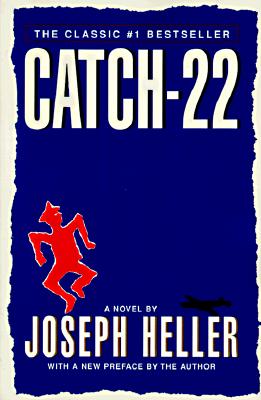
You're Catch-22!
by Joseph Heller
Incredibly witty and funny, you have a taste for irony in all that you see. It seems that life has put you in perpetually untenable situations, and your sense of humor is all that gets you through them. These experiences have also made you an ardent pacifist, though you present your message with tongue sewn into cheek. You could coin a phrase that replaces the word "paradox" for millions of
people.
Take the Book Quiz
at the Blue Pyramid.
Upcoming Appearances (Kelly McCullough)
I'll be on the Wisconsin Public Radio show Spectrum West with a brief interview on Thursday February 7th. The show airs at 5:00 p.m. I'll also be giving a talk and doing a bit of a reading at the Menomonie Public Library on February 11th at 7:00 p.m.
Tuesday, February 05, 2008
Making Light Indices (still in progress)
For those of you who've been following the Making Light Indices, I wanted to put in a quick update. Yes, I am still working on the project, but it's been sidelined by finishing up the current book and I may not post the next bit until March, though I'm hoping to get one more post in to finish 2006 sometime this month.
Interview with Paul Melko
On today's program we'll be talking with fellow SFNovelist Paul Melko about his new novel Singularity's Ring which is coming out today from Tor Books.
Paul lives in Ohio with his beautiful wife and four fairly wonderful children. He is an active member of the Science Fiction Writers of America, where he sits on the board of directors as the South-Central Regional Director and is chair of the Grievance Committee.
Paul's fiction has appeared in Asimov's Science Fiction, Realms of Fantasy, Spider Magazine, The Year's Best Science Fiction, Talebones, and other magazines and anthologies. His work has been translated into Spanish, Hungarian, Czech, and Russian, and it has been nominated for the Sturgeon, Nebula, and Hugo Awards. Singularity's Ring is his first novel.
1) What was your inspiration for writing Singularity's Ring?
This is all Lou Anders' fault. He was inviting authors to write stories for his upcoming anthology entitled Live Without a Net back in 2001. "Give me something where the internet and computers are not the be-all and end-all of technology. Give me something different," he said. "What kind of future would that be?" I wondered, thinking his anthology wouldn't find a lot of takers. Of course, my subconscious rolled the idea over and over, and by the next morning I had the genesis of "Singletons in Love." That story went on to be reprinted in Dozois' The Year's Best Science Fiction, and it became the second chapter of Singularity's Ring.
2) Who are your favorite authors and books now and when you were growing up?
As a youth, I read to escape and loved a good science fiction yarn: Heinlein, Farmer, Harrison, Haldeman, and Panshin. These days, I'm reading more YA fiction as my daughter starts to read: Westerfeld, Rowland, and Tolkien. Just this last week, my son started reading The Hitchhiker's Guide to the Galaxy. It's been fun to re-read it with him.
3) Summarize the book for our viewers.
Singularity's Ring is set several decades in the future, and the world has collapsed in a technological cataclysm. Most of humanity has died or disappeared in a singularity event, and what is left of humanity is being shepherded carefully by Pod Society. Pods are an experiment in multiple humans: duos, trios, quartets, and quintets of humans that share thoughts and emotions among themselves. The environment is unstable and the world seems on the brink of another cataclysm. Apollo Papadopulos has been bred to fly a starship through the Rift, a remnant of the singularity event. Only forces don't want him to succeed. And, amazingly, someone has come down the space elevator from the supposedly empty Ring.
4) Why did you decide to make Apollo a quintet?
My protagonist is not one person, but five. Lou Anders didn't want silicon computers, so I created a biological computer: Apollo Papadopulos is five humans altered to think as one. As such, his thoughts benefit from the synergism of their network; he can make great intuitive leaps, understand things quickly, and come to more logical conclusions. Of course, there's a trade-off. You or I would see him (them) standing still, grasping hands for seconds at a time while he (they) come to consensus.
5) What (besides writing) do you do for fun?
Recently I took up Taekwondo. My children started last year, and it looked like so much fun, I joined them. I was right; it was fun. We're all blue belts. We've managed to not break anything in the house yet.
6) What sort of research did you do to write this book?/What kind of preparation do you do when you are writing?
Singularity's Ring is an adventure story that follows Apollo from the Rockies to Geosynchronous Earth Orbit to the Amazon and Congo. There's also, of course, an orbital structure, the Ring. The scope of the book allowed me to draw on the details of these exotic locales, as well as create a technological artifact that's larger in diameter than the Earth.
7) What are you writing now?
I just turned in the novel-version of my Hugo-, Nebula-, and Sturgeon-nominated novella "The Walls of the Universe." This is a parallel universe story in which one version of my protagonist tricks another version out of his life. Farmboy John Rayburn is cast into the multiverse, and tries to get home again.
Paul lives in Ohio with his beautiful wife and four fairly wonderful children. He is an active member of the Science Fiction Writers of America, where he sits on the board of directors as the South-Central Regional Director and is chair of the Grievance Committee.
Paul's fiction has appeared in Asimov's Science Fiction, Realms of Fantasy, Spider Magazine, The Year's Best Science Fiction, Talebones, and other magazines and anthologies. His work has been translated into Spanish, Hungarian, Czech, and Russian, and it has been nominated for the Sturgeon, Nebula, and Hugo Awards. Singularity's Ring is his first novel.
1) What was your inspiration for writing Singularity's Ring?
This is all Lou Anders' fault. He was inviting authors to write stories for his upcoming anthology entitled Live Without a Net back in 2001. "Give me something where the internet and computers are not the be-all and end-all of technology. Give me something different," he said. "What kind of future would that be?" I wondered, thinking his anthology wouldn't find a lot of takers. Of course, my subconscious rolled the idea over and over, and by the next morning I had the genesis of "Singletons in Love." That story went on to be reprinted in Dozois' The Year's Best Science Fiction, and it became the second chapter of Singularity's Ring.
2) Who are your favorite authors and books now and when you were growing up?
As a youth, I read to escape and loved a good science fiction yarn: Heinlein, Farmer, Harrison, Haldeman, and Panshin. These days, I'm reading more YA fiction as my daughter starts to read: Westerfeld, Rowland, and Tolkien. Just this last week, my son started reading The Hitchhiker's Guide to the Galaxy. It's been fun to re-read it with him.
3) Summarize the book for our viewers.
Singularity's Ring is set several decades in the future, and the world has collapsed in a technological cataclysm. Most of humanity has died or disappeared in a singularity event, and what is left of humanity is being shepherded carefully by Pod Society. Pods are an experiment in multiple humans: duos, trios, quartets, and quintets of humans that share thoughts and emotions among themselves. The environment is unstable and the world seems on the brink of another cataclysm. Apollo Papadopulos has been bred to fly a starship through the Rift, a remnant of the singularity event. Only forces don't want him to succeed. And, amazingly, someone has come down the space elevator from the supposedly empty Ring.
4) Why did you decide to make Apollo a quintet?
My protagonist is not one person, but five. Lou Anders didn't want silicon computers, so I created a biological computer: Apollo Papadopulos is five humans altered to think as one. As such, his thoughts benefit from the synergism of their network; he can make great intuitive leaps, understand things quickly, and come to more logical conclusions. Of course, there's a trade-off. You or I would see him (them) standing still, grasping hands for seconds at a time while he (they) come to consensus.
5) What (besides writing) do you do for fun?
Recently I took up Taekwondo. My children started last year, and it looked like so much fun, I joined them. I was right; it was fun. We're all blue belts. We've managed to not break anything in the house yet.
6) What sort of research did you do to write this book?/What kind of preparation do you do when you are writing?
Singularity's Ring is an adventure story that follows Apollo from the Rockies to Geosynchronous Earth Orbit to the Amazon and Congo. There's also, of course, an orbital structure, the Ring. The scope of the book allowed me to draw on the details of these exotic locales, as well as create a technological artifact that's larger in diameter than the Earth.
7) What are you writing now?
I just turned in the novel-version of my Hugo-, Nebula-, and Sturgeon-nominated novella "The Walls of the Universe." This is a parallel universe story in which one version of my protagonist tricks another version out of his life. Farmboy John Rayburn is cast into the multiverse, and tries to get home again.
Monday, February 04, 2008
SpaceWesterns Market
Camille Alexa posted this market on BroadUniverse (it pays, although not terribly well):
Everyone:
SpaceWesterns.com (ed. Nathan E. Lilly) is actively seeking Space Western science fiction written by women to publish during Women's History Month (March). They're interested in SF with a SpaceWestern feel, Steampunk, Weird West, etc.
From their guidelines [http://www.spacewesterns.com/submissions/]:
"For our purposes we consider the following to be examples of works with strong Space Western themes (inter-planetary fiction containing Western genre themes): Flash Gordon (comic, movie serial, and 1978 animated serial), Buck Rogers, Star Wars, Star Trek, Battlestar Galactica (both series), Firefly, Serenity, Mike Resnick's Santiago, Ande Norton's Beastmaster series, Ray Bradbury's The Martian Chronicles, The Adventures of the Galaxy Rangers, Bravestarr, Silverhawks, Cowboy Bebop, Outlaw Star, Coyote Ragtime Show, and Trigun."
AND:
"We've all seen the white man in a white hat riding his white horse into the sunset. The Western genre is replete with white male driven stories. The Space Western sub-genre isn't much different. Send us stories with strong women, weak women, but most of all stories with real women. Send us stories from a non-WASP point-of-view: fiction about Chinese, Native American, Mexican/Spanish, African/African-American and/or even the "New Immigrants" — (German, Irish/Gaelic, Italian, Russian) peoples influences on the Western themes."
Payments/Requirements: "We are looking for stories and articles of no more than 7,500 words in length. Current rates for unsolicited manuscripts are ½¢/word to a maximum of $25, paid upon publication. Reprints will be considered. Serials welcome, but single stand-alone stories are preferred."
Friday, February 01, 2008
Dear Feline Collective Follow-Up
Re: ugly development in lapsharing negotiations.
It has come to management's attention that already today the writer-in-residence has twice had, not one, but two cats taking up valuable lap space normally devoted to the means of writerly production (see laptop, Apple iBook G4).
Further it has come to management's attention that resolution of which cat retained possession of said lap was resolved through hissing and intimidation. Once, blows were even exchanged. This is simply not acceptable and may actually result in demonstration by writer-in-residence that despite normal dominance protocols, writer-in-residence is in fact a larger predator, one who outweighs said cats by an order of magnitude.
Please take note of the fact that despite being a Cat Softie, with a capital CS, writer-in-residence has a very limited patience for anything that involves potential bleeding, and adjust your negotiating strategies accordingly.
Thank you,
The management
It has come to management's attention that already today the writer-in-residence has twice had, not one, but two cats taking up valuable lap space normally devoted to the means of writerly production (see laptop, Apple iBook G4).
Further it has come to management's attention that resolution of which cat retained possession of said lap was resolved through hissing and intimidation. Once, blows were even exchanged. This is simply not acceptable and may actually result in demonstration by writer-in-residence that despite normal dominance protocols, writer-in-residence is in fact a larger predator, one who outweighs said cats by an order of magnitude.
Please take note of the fact that despite being a Cat Softie, with a capital CS, writer-in-residence has a very limited patience for anything that involves potential bleeding, and adjust your negotiating strategies accordingly.
Thank you,
The management
Subscribe to:
Posts (Atom)