So I have this friend (no, really....) Anyway, she e-mailed m on Facebook the other day asking for some advice. She's got a self-published poetry book and she wanted to know how to get people to buy it. What can she do?
Hmmmm.
I probably shouldn't have, but I ended up telling her the truth: I'm sorry. Not much.
Poetry is a tough sell even when it's published by a New York publishing house to rave reviews in the New Yorker. Heck, fiction books are a tough sells.... and publishers aren't always even sure themselves what sells a book (or an author, as it were.)
She'd asked about ideas for getting into those big box stores for signings, and I told her (again, I probably shouldn't have,) that signings don't actually sell tons of books. A good signing for me? About a dozen books. Big box stores aren't always even receptive to getting that cold call from someone like me, who is local and big press published -- unless I can guarantee them an audience. When I used to try to get into box stores, I'd always do a little research first, ie. "I see you have a science fiction book club and...." It's hard, discouraging work. And, even if you do land a signing gig at the big box stores it's still pretty likely you'll be sitting with crickets.
Plus, most big box stores won't even look twice at a self-published author.
The exception is the smaller, independently owned bookstores. I've had a lot better luck at places like Uncle Hugos, Dreamhaven or True Colors. But in each of those cases, I have a personal relationship with the owners and, particularly with Don at Uncles, I do my damnest to make sure everyone I've ever known gets an invitation to the signing. I can usually sell twenty or thirty books at Uncles, but I also no longer do more than one or two signings per debut... so people know they have to come to one of these if they want to get a personally signed book.
But, I'm not sure any of those would really entertain the idea of a self-published author signing. Small press, yes. Self? I don't know.
I suggested a "house party/signing." Something she could host herself and invite friends. But, she admited... she's already tapped all her friends, and most of them aren't biting either.
Hmmmmm.
This is the problem, I told her. It's a tough business even when you have all the advantages of a big publisher at your back. It kind of sucks when you've got the handicap of self-publishing to overcome.
All I could really say was: Good luck!
Tuesday, June 30, 2009

Monday, June 29, 2009
Smart Things
Sunday, June 28, 2009
Kelly's CONvergence Schedule
So, I'm going to be GOHing at CONvergence this coming weekend and thought I ought to post my schedule.
Wednesday July 1:
Evening: Reception
Thursday July 2:
5:00 PM: Going from a Poor Unpublished Author to a Poor Published Author (Panelist(s): Kelly McCullough, Pat Rothfuss
7:00 PM: Opening Ceremony Main Stage
Friday July 3
12:30 PM: Beta Reading: Relying on the Honesty of Friends (Panelist(s): Kelly McCullough, Terry Garey, Elise Matthesen, M. K. Melin, Kathy Sullivan
2:00 PM: Kelly McCullough GOH Reading
3:30 PM: Inserting Humor Into Your Writing (Panelist(s): Kelly McCullough, Brian Keene, M. K. Melin, S.D. Hintz, Jerrod Balzer, Patrick Rothfuss
5:00 PM: Why Writers Should Archive (Panelist(s): Kelly McCullough, Meredith Gillies, Elise Matthesen, Lynne Thomas
Saturday July 4
11:00 AM: The Works of Kelly McCullough (Panelist(s): Kelly McCullough, Eric Heideman (mod), David Lenander (mod)
12:30 PM: Meet the Wyrdsmiths (Description: Kelly McCullough, Lyda Morehouse, Eleanor Arnason, Naomi Kritzer, Sean M. Murphy, Doug Hulick
2:00 PM: Genre Blender (Panelist(s): Kelly McCullough, Jeannie Holmes, Matthew Davis, S.D. Hintz, Dana Baird, Jerrod Balzer
3:30 PM: Kelly McCullough Signing
11:30 PM: Guest of Honor Cage Match (Panelist(s): Patrick Rothfuss, Kelly McCullough, Trace Beaulieu, Frank Conniff, Brian Keene, Joel Hodgson, Mary Jo Pehl, Dwayne McDuffie
Sunday July 5
3:30 PM: The Twin Cities School (Panelist(s): Kelly McCullough, Hilary Moon Murphy, Michael Merriam, Ruth Berman
5:00 PM: Closing Ceremony Main Stage
??:?? PM: Dead Dog Party
P.S.: the convention master schedule can be found here: http://schedule.convergence-con.org/
Wednesday July 1:
Evening: Reception
Thursday July 2:
5:00 PM: Going from a Poor Unpublished Author to a Poor Published Author (Panelist(s): Kelly McCullough, Pat Rothfuss
7:00 PM: Opening Ceremony Main Stage
Friday July 3
12:30 PM: Beta Reading: Relying on the Honesty of Friends (Panelist(s): Kelly McCullough, Terry Garey, Elise Matthesen, M. K. Melin, Kathy Sullivan
2:00 PM: Kelly McCullough GOH Reading
3:30 PM: Inserting Humor Into Your Writing (Panelist(s): Kelly McCullough, Brian Keene, M. K. Melin, S.D. Hintz, Jerrod Balzer, Patrick Rothfuss
5:00 PM: Why Writers Should Archive (Panelist(s): Kelly McCullough, Meredith Gillies, Elise Matthesen, Lynne Thomas
Saturday July 4
11:00 AM: The Works of Kelly McCullough (Panelist(s): Kelly McCullough, Eric Heideman (mod), David Lenander (mod)
12:30 PM: Meet the Wyrdsmiths (Description: Kelly McCullough, Lyda Morehouse, Eleanor Arnason, Naomi Kritzer, Sean M. Murphy, Doug Hulick
2:00 PM: Genre Blender (Panelist(s): Kelly McCullough, Jeannie Holmes, Matthew Davis, S.D. Hintz, Dana Baird, Jerrod Balzer
3:30 PM: Kelly McCullough Signing
11:30 PM: Guest of Honor Cage Match (Panelist(s): Patrick Rothfuss, Kelly McCullough, Trace Beaulieu, Frank Conniff, Brian Keene, Joel Hodgson, Mary Jo Pehl, Dwayne McDuffie
Sunday July 5
3:30 PM: The Twin Cities School (Panelist(s): Kelly McCullough, Hilary Moon Murphy, Michael Merriam, Ruth Berman
5:00 PM: Closing Ceremony Main Stage
??:?? PM: Dead Dog Party
P.S.: the convention master schedule can be found here: http://schedule.convergence-con.org/
Saturday, June 27, 2009
Friday, June 26, 2009
Friday Cat Blogging
The committee for feline domination takes a meeting
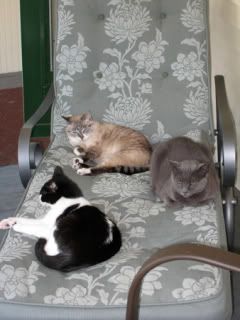
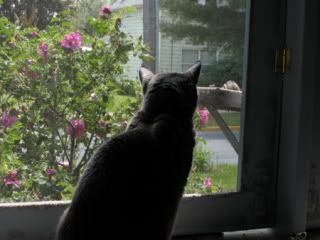
I will killz teh chipmunk with mah mind
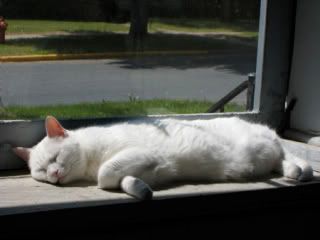
I needs mah beauty sleep
Well, I needs mah cutie sleep, so there
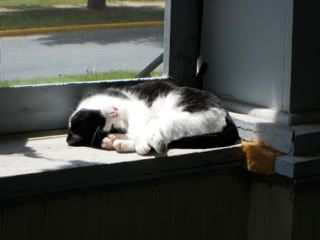
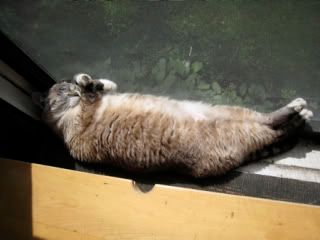
Waz an otter in previous life, sometimes I has flashbacks
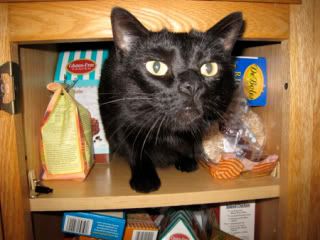
What? Dis da gluten free shelf, right? I'z 100 percent gluten free

I will killz teh chipmunk with mah mind

I needs mah beauty sleep

Well, I needs mah cutie sleep, so there

Waz an otter in previous life, sometimes I has flashbacks

What? Dis da gluten free shelf, right? I'z 100 percent gluten free

Wednesday, June 24, 2009
Smart Things
Lilith Saintcrow saying smart things about a bunch of stuff: you need more than a good book, self-promotion—the hard sell doesn't work, and the secret to getting published which includes the same be professional message I was talking about at SFNovelists a while back, among a myriad of other good advice.
Plus Dean Wesley Smith on what life would be like without agents, parts one, and two.
Plus Dean Wesley Smith on what life would be like without agents, parts one, and two.
Time to Publication
John Scalzi is talking about why debut novelists are so often so much older than debut musicians or actors. I commented over there with my own timeline and it seemed worth noting it here too. Please feel free to post your own both here and there.
My novel publishing timeline:
1967 – 1991: Time spent learning to write well enough to write a novel (26).
1991: Wrote first complete novel (26)
1992–1993: Wrote two more novels, one of which is possibly publishable with rewrite (28)
1993-1998: Wrote a bunch of short stories while trying to sell all three initial novels (31)
1999: Started selling shorts and returned to novels, writing the book that would ultimately sell first (32)
2000: Got agent who started marketing novel (33)
2000-2005: Wrote three more novels, all still looking for publishers (38)
2005: Contract signed for that debut novel (38)
2006: Debut novel published (39)
My novel publishing timeline:
1967 – 1991: Time spent learning to write well enough to write a novel (26).
1991: Wrote first complete novel (26)
1992–1993: Wrote two more novels, one of which is possibly publishable with rewrite (28)
1993-1998: Wrote a bunch of short stories while trying to sell all three initial novels (31)
1999: Started selling shorts and returned to novels, writing the book that would ultimately sell first (32)
2000: Got agent who started marketing novel (33)
2000-2005: Wrote three more novels, all still looking for publishers (38)
2005: Contract signed for that debut novel (38)
2006: Debut novel published (39)
Catch of the Day

"If you have any young friends who aspire to become writers, the second-greatest favor you can do them is to present them with copies of The Elements of Style. The first-greatest, of course, is to shoot them now, while they’re happy."
—Dorothy Parker
Tuesday, June 23, 2009
Partnered Work Ethic
I'm about to drive Shawn (who HATES to travel) off to the airport for her big trip to Washington, D.C. She'll be gone until Friday. And I'm just curious... those of you out there who are married/partnered/SOed writers, do you find you get more or less work done with other half gone?
For me, it varies. I can sometimes become hyper-diligent, particularly in the evenings when I'm usually willing to say "screw writing!" to hang out with popcorn, my sweetie, and a Netflix movie. Other times, I find myself sublimating by playing far too much Solitaire / Peggle / whatever late, late into the evenings... the kind of nights when I look up and say, "Wha...? 2 am already??"
What about you?
For me, it varies. I can sometimes become hyper-diligent, particularly in the evenings when I'm usually willing to say "screw writing!" to hang out with popcorn, my sweetie, and a Netflix movie. Other times, I find myself sublimating by playing far too much Solitaire / Peggle / whatever late, late into the evenings... the kind of nights when I look up and say, "Wha...? 2 am already??"
What about you?

Monday, June 22, 2009
Monday WIP Open Thread
I'm not sure if Kelly is back from the lake yet, so I'm going to jump in with the Monday WIP post.
Today, I am hoping to get back on some kind of a writing schedule. My wife has been in Norway for a week, which meant that when I wasn't watching our two kids, I was generally too fried/exhausted/distracted/brain-dead to put anything down on paper other than, "Bub-bub-bub-bub." My wife returns today, which means that, if not now, then tomorrow, I can get back to work (I hope -- summer is always a challenging writing time for me because I am at home with the boys).
I have two writing projects on my immediate docket:
1) Continue working on Hawthorn Queen. I've been hovering around the 60k mark for almost a month now, and it's time push past that and get headed towards the end.
2) Do a final cleaning pass through Dust and Steel and re-evaluate a couple of scenes, then get it off to my agent (did I mention I got an agent last week? Same as Kelly, Sternig & Byrne. :) so Jack can begin talking it up to editors.
Other than that, it's the typical summer fare: keep the kids occupied, fix what needs fixing around the house, figure out how to fit everything in in what's left of summer, and so on.
So, how about you? What are you up to, writing or otherwise?
Today, I am hoping to get back on some kind of a writing schedule. My wife has been in Norway for a week, which meant that when I wasn't watching our two kids, I was generally too fried/exhausted/distracted/brain-dead to put anything down on paper other than, "Bub-bub-bub-bub." My wife returns today, which means that, if not now, then tomorrow, I can get back to work (I hope -- summer is always a challenging writing time for me because I am at home with the boys).
I have two writing projects on my immediate docket:
1) Continue working on Hawthorn Queen. I've been hovering around the 60k mark for almost a month now, and it's time push past that and get headed towards the end.
2) Do a final cleaning pass through Dust and Steel and re-evaluate a couple of scenes, then get it off to my agent (did I mention I got an agent last week? Same as Kelly, Sternig & Byrne. :) so Jack can begin talking it up to editors.
Other than that, it's the typical summer fare: keep the kids occupied, fix what needs fixing around the house, figure out how to fit everything in in what's left of summer, and so on.
So, how about you? What are you up to, writing or otherwise?
Friday, June 19, 2009
Why you need cliches like you need a hole in the head
(Cross-posted from my LiveJournal, swords_and_pens)
Overheard bit of dialog from a kids' program from another room:
"Those taste like sweat socks. And not the good kind."
I like the cadence of this line, and how it plays against usual adult expectations. The slow burn of the "eww" factor is nicely achieved, too.
Yes, it's a campy little line, and not a particularly challenging one in terms of construction (we've seen the form a million times: "cliche + pause + qualifier that makes the cliche worse"); but it does what it sets out to do well. That it hits both the target audience and the adult in the other room speaks to its success, I think
Is there a writing take-away here? If pushed, I'd have to say that even a tired form can be used to good effect if approached in the right manner. It's easy to stumble with well-worn constructions, though, so the writer needs to be wary: one person's clever turn is another's crashing failure. Cliches can occasionally become new and interesting when they are put in a different habitat and given a new coat of feathers; but not always. Know what you are trying to do with the turn of phrase and try to get as much work out of it as you can. Layers can be your friend here: they give added heft to what otherwise might come off as a feather-light line. Just don't over do it An over-worked line (and especially a ill-used cliche) can quickly turn into an unintentional literary farce, which is worse than original one-off in many ways
So, am I defending cliches? In a sense, I suppose I am. Tradition (not to mention Strunk & White, from what I recall) says we should eschew cliches and well-worn turns of phrase. Terms like "lazy writing" and "muddy prose" come back to me from my days of college composition -- phrases beat into me so hard that it's tough to ignore them. But I am a genre writer, and what's more, I write in a loose, quick style that tends to blend noire and adventure and, occasionally, a comelier turn of phrase. (Please note: I am not disparaging genre writers of any form, nor saying their writing is less worthy or more sloppy. I am simply saying we sometimes have a bit more latitude when it comes to style than some other forms.) For me, there are times when cliche, when the "short-cut" or "lazy writing", can do more work (and sometimes, more complex work) than a carefully crafted string of prose. Cliches are, after all, what they are because everyone knows what they mean. They are a common, if over-used, touch point. The trick, as a writer, is knowing when a cliche is just a cliche, and when it can be something more.
By no means am I saying that, as writers, we should all run out and start using cliches like they are going out of style. That would be like throwing the baby out with the bathwater. But what I am saying is, like so many other "rules" of writing, the use of well-worn turns of phrase and hackneyed constructions can have a place in a piece of writing -- it just has to be used with care and the understanding that, just like nitroglycerin in the old westerns (a well-used cinematic cliche in its day), it can blow up in your face if you aren't careful about how you handle it.
Overheard bit of dialog from a kids' program from another room:
"Those taste like sweat socks. And not the good kind."
I like the cadence of this line, and how it plays against usual adult expectations. The slow burn of the "eww" factor is nicely achieved, too.
Yes, it's a campy little line, and not a particularly challenging one in terms of construction (we've seen the form a million times: "cliche + pause + qualifier that makes the cliche worse"); but it does what it sets out to do well. That it hits both the target audience and the adult in the other room speaks to its success, I think
Is there a writing take-away here? If pushed, I'd have to say that even a tired form can be used to good effect if approached in the right manner. It's easy to stumble with well-worn constructions, though, so the writer needs to be wary: one person's clever turn is another's crashing failure. Cliches can occasionally become new and interesting when they are put in a different habitat and given a new coat of feathers; but not always. Know what you are trying to do with the turn of phrase and try to get as much work out of it as you can. Layers can be your friend here: they give added heft to what otherwise might come off as a feather-light line. Just don't over do it An over-worked line (and especially a ill-used cliche) can quickly turn into an unintentional literary farce, which is worse than original one-off in many ways
So, am I defending cliches? In a sense, I suppose I am. Tradition (not to mention Strunk & White, from what I recall) says we should eschew cliches and well-worn turns of phrase. Terms like "lazy writing" and "muddy prose" come back to me from my days of college composition -- phrases beat into me so hard that it's tough to ignore them. But I am a genre writer, and what's more, I write in a loose, quick style that tends to blend noire and adventure and, occasionally, a comelier turn of phrase. (Please note: I am not disparaging genre writers of any form, nor saying their writing is less worthy or more sloppy. I am simply saying we sometimes have a bit more latitude when it comes to style than some other forms.) For me, there are times when cliche, when the "short-cut" or "lazy writing", can do more work (and sometimes, more complex work) than a carefully crafted string of prose. Cliches are, after all, what they are because everyone knows what they mean. They are a common, if over-used, touch point. The trick, as a writer, is knowing when a cliche is just a cliche, and when it can be something more.
By no means am I saying that, as writers, we should all run out and start using cliches like they are going out of style. That would be like throwing the baby out with the bathwater. But what I am saying is, like so many other "rules" of writing, the use of well-worn turns of phrase and hackneyed constructions can have a place in a piece of writing -- it just has to be used with care and the understanding that, just like nitroglycerin in the old westerns (a well-used cinematic cliche in its day), it can blow up in your face if you aren't careful about how you handle it.
Friday Cat Blogging
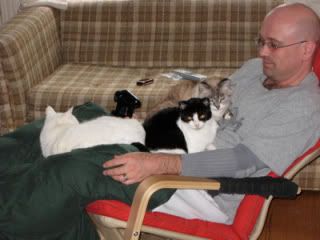
Blob cat, blobing
It is the East, and Juliet the sun
Gaming cats and their custom chair rig
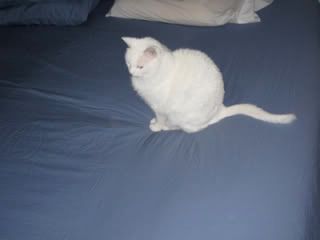
Helpy cat helps with bed making
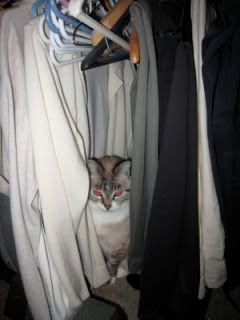
Lazer cat is in ur closet fryin ur shirtz

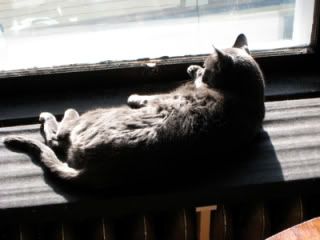
It is the East, and Juliet the sun

Gaming cats and their custom chair rig

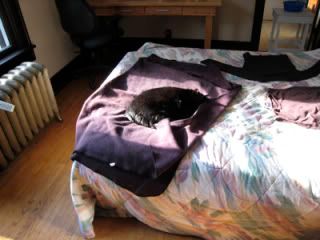
Helpy cat helps with bed making

Lazer cat is in ur closet fryin ur shirtz

Wednesday, June 17, 2009
Writing Pain
This started as a comment in Justine Larbalestier's post about writing physical pain. I thought it might interest some of you here, so I've ported it over:
In my first published novel (WebMage) I wrote a good bit about a knee injury my central character incurs in the first couple of chapters and about how it affects everything he does from there on out. In that case I was writing from the personal experience of the aftermath of a torn cartilage injury that I lived with for more than a decade before I had the insurance necessary to get surgery.
Rather than focus on the pain itself (which sucks but isn't all that interesting) I focused on the things that it simply made impossible. With my injury the pain was intermittent depending on whether a bit of the torn cartilage had flopped into the cup for the end of my knee bones or not. If not, I could do many things just fine, but always with the awareness that might suddenly change. If so, there were all sorts of things that were simply too painful to do--long walks, walking any distance more than about 50 feet without my cane, running, stairs, etc.
I think the random length cyclic nature of being able and unable to do things was the most interesting thing about the injury, so that's what I focused on. Since that's a component in many injury type pains it's not a bad departure point.
Thoughts? Comments? Questions?
In my first published novel (WebMage) I wrote a good bit about a knee injury my central character incurs in the first couple of chapters and about how it affects everything he does from there on out. In that case I was writing from the personal experience of the aftermath of a torn cartilage injury that I lived with for more than a decade before I had the insurance necessary to get surgery.
Rather than focus on the pain itself (which sucks but isn't all that interesting) I focused on the things that it simply made impossible. With my injury the pain was intermittent depending on whether a bit of the torn cartilage had flopped into the cup for the end of my knee bones or not. If not, I could do many things just fine, but always with the awareness that might suddenly change. If so, there were all sorts of things that were simply too painful to do--long walks, walking any distance more than about 50 feet without my cane, running, stairs, etc.
I think the random length cyclic nature of being able and unable to do things was the most interesting thing about the injury, so that's what I focused on. Since that's a component in many injury type pains it's not a bad departure point.
Thoughts? Comments? Questions?
Tuesday, June 16, 2009
Tuesday Morning WIP Open Thread
Hey all,
What are you up to? I'm about to medicate a cat, an action that is often followed by quiet bleeding. Well not really, not with our cats at least. Then probably a walk and working on getting Eye of Horus into submission shape and out the door.
What are you up to? I'm about to medicate a cat, an action that is often followed by quiet bleeding. Well not really, not with our cats at least. Then probably a walk and working on getting Eye of Horus into submission shape and out the door.
Monday, June 15, 2009
The Velocity of Prose
A number of years ago, a writer friend of mine, Heloise S., proposed that the velocity of prose might be represented by the equation
Mme S. notes wisely that (a) euphony and (b) money remain uncontrolled variables.
(Sneakily cross-posted from my new scrap-blog.)
etiology = teleology (charactersx)where x equals the number of characters in the story.
conflict
Mme S. notes wisely that (a) euphony and (b) money remain uncontrolled variables.
(Sneakily cross-posted from my new scrap-blog.)
Friday, June 12, 2009
Friday Cat Blogging—The Late Show
Three chairs, three cats
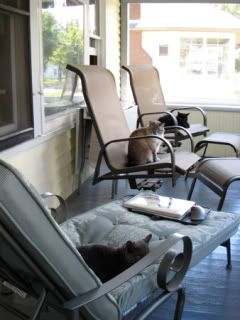
The Committee for Feline Domination takes a meeting
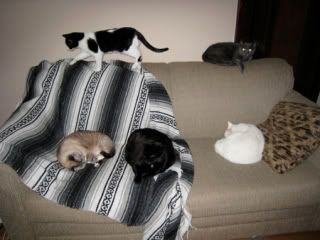
Gopher!
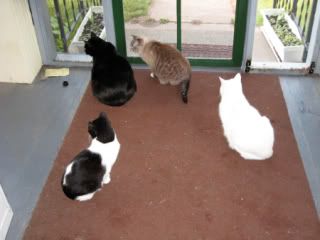
Is it cold in here, or what?
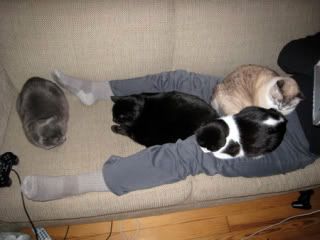
The feline collective "helps" with gaming
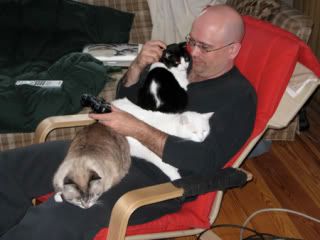

The Committee for Feline Domination takes a meeting

Gopher!

Is it cold in here, or what?

The feline collective "helps" with gaming

Thursday, June 11, 2009
More on the garden
Here are the promised garden shots:
Before:
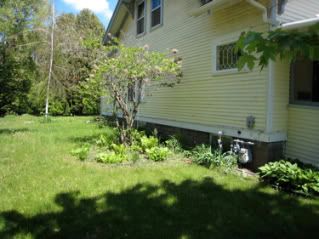
Beginning:
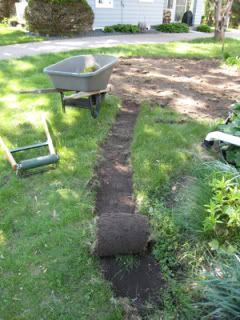
The sodkicker:
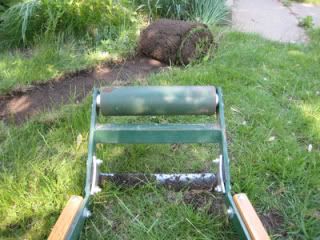
Sod removed:
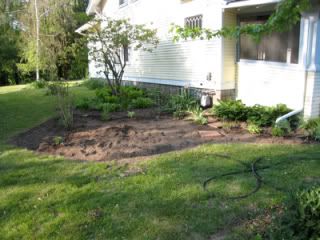
After, overview:
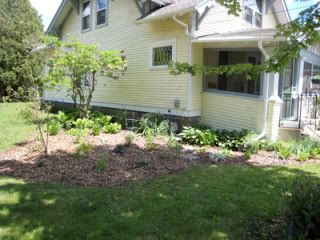
Closeups:
1:
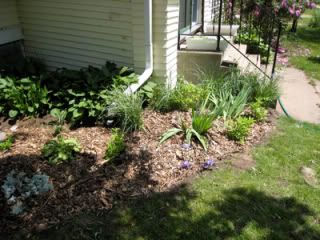
2:
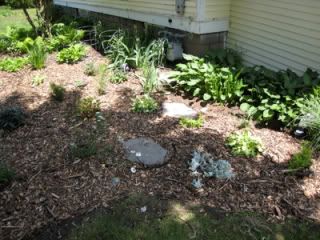
3:
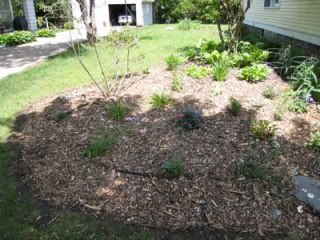
Before:

Beginning:

The sodkicker:

Sod removed:

After, overview:

Closeups:
1:

2:

3:

Wednesday, June 10, 2009
Smart Things—The World Without...
Dean Smith, who is one of my mentors, is running a great series of posts on the publishing world without... The first two are "without returns" parts one and two the third is part one of "without agents." All are very worthwhile reading for what they can teach the reader about the way the publishing industry works.
Tuesday, June 09, 2009
Not Writing = Vivid Dreaming = Need to Write
Sometimes people ask me where I get my ideas, or why I write. This is one part of the answer.
For a number of reasons I haven't been writing the past month and a half. First there was the post-book lull compounded by Laura needing a ton of help to get her department moved. Then there was the spring gardening madness which has to get done while the weather and the season are right. Now that that's all almost done, I'm starting to think about writing again, and boy do I need it.
I don't know about you, but I can't shut off the creative part of my brain. Whether I'm writing or not, there's a never-ending spring of strange in the depths there. It works a bit like a reservoir behind a dam. If I'm writing, the sluice gates are open and the weird wells up and pours into the book. If I'm not writing, the levels just keep getting higher until they start to pour over the top.
The main places they go when they do that are my early morning pre-filters conversation and my dreams. Normally, when I'm writing, I either don't remember my dreams, or (occasionally) I have dreams about the book. When I start to remember my dreams I know I need to direct the flow back into fiction. Generally I do this at the one remembered vivid dream a night stage. I'm up to three most nights.
For example, last night I had two which stayed with me well into today:
The first was a castle break-in dream in which Laura and I and two large brown bears were sneaking into a castle. For some reason we had decided to pretend that we were there for a bear-polka party—which was why we needed the bears. The rest of the details got written over by the second dream.
The second involved Laura and I sitting on stage chatting with Minnie Mouse as part of a Disney On Ice show. This Minnie did synchronized swimming kind of stuff at the midpoint and she and I got to talking about how the On Ice stars all practiced fencing. About midway through this, John McCain showed up and we got into a verbal tussle which led to arranging a duel—cavalry sabers to first blood. After Arlen Specter arranged the exchange of information for the duel Minnie invited me to train with the On Ice crew for the duel because John McCain was always making their life miserable.
Since I don't want to spend my night polkaing with bears or fencing with Minnie and McCain, I really need to get back to writing.
How about you, gentle reader? What happens to you when you don't create?
For a number of reasons I haven't been writing the past month and a half. First there was the post-book lull compounded by Laura needing a ton of help to get her department moved. Then there was the spring gardening madness which has to get done while the weather and the season are right. Now that that's all almost done, I'm starting to think about writing again, and boy do I need it.
I don't know about you, but I can't shut off the creative part of my brain. Whether I'm writing or not, there's a never-ending spring of strange in the depths there. It works a bit like a reservoir behind a dam. If I'm writing, the sluice gates are open and the weird wells up and pours into the book. If I'm not writing, the levels just keep getting higher until they start to pour over the top.
The main places they go when they do that are my early morning pre-filters conversation and my dreams. Normally, when I'm writing, I either don't remember my dreams, or (occasionally) I have dreams about the book. When I start to remember my dreams I know I need to direct the flow back into fiction. Generally I do this at the one remembered vivid dream a night stage. I'm up to three most nights.
For example, last night I had two which stayed with me well into today:
The first was a castle break-in dream in which Laura and I and two large brown bears were sneaking into a castle. For some reason we had decided to pretend that we were there for a bear-polka party—which was why we needed the bears. The rest of the details got written over by the second dream.
The second involved Laura and I sitting on stage chatting with Minnie Mouse as part of a Disney On Ice show. This Minnie did synchronized swimming kind of stuff at the midpoint and she and I got to talking about how the On Ice stars all practiced fencing. About midway through this, John McCain showed up and we got into a verbal tussle which led to arranging a duel—cavalry sabers to first blood. After Arlen Specter arranged the exchange of information for the duel Minnie invited me to train with the On Ice crew for the duel because John McCain was always making their life miserable.
Since I don't want to spend my night polkaing with bears or fencing with Minnie and McCain, I really need to get back to writing.
How about you, gentle reader? What happens to you when you don't create?
Monday, June 08, 2009
Monday Morning WIP
I just finished turning the soil for a late-in-the-season garden project. My five year old son wants to have a victory garden like the Obamas, although, really, he explained that what he really wants in several acres of corn... but he has to make due with a small square of former yard for a few sunflowers, carrots, corn, peas, and beans.
After I finish posting here, I plan to continue work on my alter ego's young adult novel (due October 15) and enjoy the chilly, rainy day with some tea and toast, perhaps.
How about you?
After I finish posting here, I plan to continue work on my alter ego's young adult novel (due October 15) and enjoy the chilly, rainy day with some tea and toast, perhaps.
How about you?
Friday, June 05, 2009
Friday Cat Blogging With Bonus Garden Blogging
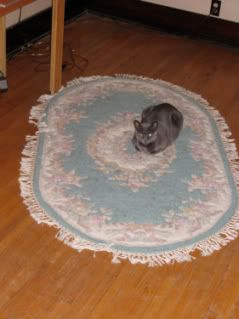
Little cat owns big rug
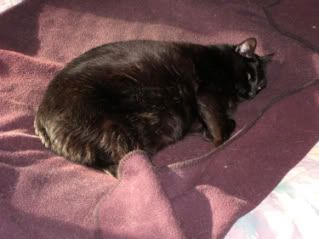
Assume a spherical cat...
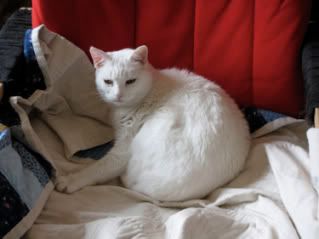
Is not your writing chair. Is mine!
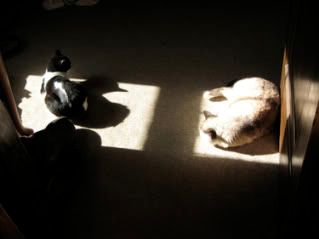
Sunlight and cattow
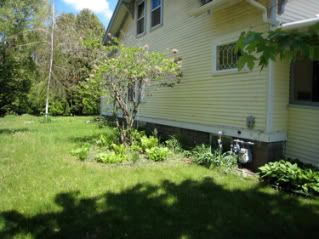
Before picture of new side bed. Note birch in background and large expanse of grass front left.

Assume a spherical cat...

Is not your writing chair. Is mine!

Sunlight and cattow

Before picture of new side bed. Note birch in background and large expanse of grass front left.

Thursday, June 04, 2009
Practice: Six Words
"For sale: baby shoes, never worn." -Ernest Hemingway
Personally, I find Hemingway's famous six-word story extremely inspiring, efficient, and full of pathos. It does what a good story must--connects to the reader's own sense of common humanity and relies upon that sensilbility to fill in the background of the story. There are few stories that can blossom from those six words that wouldn't touch us, move us--and that is, to my mind, an amazing feat.
Because of that, I try to hone my own craft by looking into what Hemingway did and learning from it, then shaping my own stories from that understanding, with the same six-word limitation. Here are a few of today's renderings:
"The puppy licked his unmoving hand."
"The wedding band chafed her finger."
"He shoved her forward, then died."
"Wedding invitations, unsent, brought fresh tears."
To be sure, these are lacking detail that could flesh out the story that I see in my mind's eye, but when I go back to it, so is Hemingway's. I like the last of these best, if only because it has the same sort of rug-pulled-out feel as what Hemingway wrote. Honestly, you could simply revise his story to read "For sale: Wedding dress, never worn." and it would be almost as good. Though there's a particular pathos about the unrealized baby that resonates, I think, more than the unrealized wedding.
So, gentle reader, have you ever worked on this particular challange? Or are there other exercises you really enjoy in the quest to improve your writing? Or just for fun?
Personally, I find Hemingway's famous six-word story extremely inspiring, efficient, and full of pathos. It does what a good story must--connects to the reader's own sense of common humanity and relies upon that sensilbility to fill in the background of the story. There are few stories that can blossom from those six words that wouldn't touch us, move us--and that is, to my mind, an amazing feat.
Because of that, I try to hone my own craft by looking into what Hemingway did and learning from it, then shaping my own stories from that understanding, with the same six-word limitation. Here are a few of today's renderings:
"The puppy licked his unmoving hand."
"The wedding band chafed her finger."
"He shoved her forward, then died."
"Wedding invitations, unsent, brought fresh tears."
To be sure, these are lacking detail that could flesh out the story that I see in my mind's eye, but when I go back to it, so is Hemingway's. I like the last of these best, if only because it has the same sort of rug-pulled-out feel as what Hemingway wrote. Honestly, you could simply revise his story to read "For sale: Wedding dress, never worn." and it would be almost as good. Though there's a particular pathos about the unrealized baby that resonates, I think, more than the unrealized wedding.
So, gentle reader, have you ever worked on this particular challange? Or are there other exercises you really enjoy in the quest to improve your writing? Or just for fun?
Wednesday, June 03, 2009
David Eddings R.I.P.
David Eddings died last night. The Belgariad was one of two series that I hauled with me on my Arizona Renaissance Festival odyssey back when I was still in theater. The other being the first couple of Wild Cards books. I'd read the Pawn of Prophecy the week before taking off and I wanted to see how it ended. Spending the next two months living in a tent in the desert without the bulk of my library meant that all of those books got reread a couple of times and imprinted them pretty deeply on my psyche. The Belgariad is a formative work for me, though unlike Wild Cards it's not one I still reread.
Ave, David, you'll be missed.
Ave, David, you'll be missed.
Monday, June 01, 2009
Catch of the Day
"The test of any good fiction is that you should care something for the characters; the good to succeed, the bad to fail. The trouble with most fiction is that you want them all to land in hell, together, as quickly as possible."
—Mark Twain
Monday Morning WIP Open Thread
Hi All,
Beginning to resurface now. The MythOS book launch swallowed big chunks of the last two week and what it didn't was eaten by gardening which has to get done as soon as the weather allows. The baby lilac hedge now has a moat of wood chips surrounding it that's roughly 65' long and 3' wide. There's a new 150 square foot garden bed on the west side of the house and it's about half full of new plants and transplants. Still need to get the rest of the plants in and put down newspaper and chips but the hard part's done. Add that to the fresh chips in the 400 square feet of the front bed, the sod nipping around the grasses bed, the fern bed, and the rhubarb and it's a ton of work done recently. Once the new beds chipped we'll have gone through something like 5 square yards of chips.
Going forward we could use that much more again in the chips department. There's also still weeding to be done and we've got stripping to do for the butcher block salvaged for the new counters. Oh, and about half the house and all of the garage to paint. I've also got critiquing to do, and I should probably start writing another book sometime soon.
How about y'all?
Beginning to resurface now. The MythOS book launch swallowed big chunks of the last two week and what it didn't was eaten by gardening which has to get done as soon as the weather allows. The baby lilac hedge now has a moat of wood chips surrounding it that's roughly 65' long and 3' wide. There's a new 150 square foot garden bed on the west side of the house and it's about half full of new plants and transplants. Still need to get the rest of the plants in and put down newspaper and chips but the hard part's done. Add that to the fresh chips in the 400 square feet of the front bed, the sod nipping around the grasses bed, the fern bed, and the rhubarb and it's a ton of work done recently. Once the new beds chipped we'll have gone through something like 5 square yards of chips.
Going forward we could use that much more again in the chips department. There's also still weeding to be done and we've got stripping to do for the butcher block salvaged for the new counters. Oh, and about half the house and all of the garage to paint. I've also got critiquing to do, and I should probably start writing another book sometime soon.
How about y'all?
Subscribe to:
Posts (Atom)